
"The death toll has gone up to 24. The search operations are still going on. However, rains have started. "Despite that, our officials, and the NDRF are engaged in search and rescue operations," Idukki District Collector H Dineshan said.

Delhi's minimum temperature on Wednesday morning plunged to 4.4 degrees Celsius -- the season's lowest -- making the national capital colder than Dharamsala, Nainital and Dehradun.

The IMD has also issued a red-coded warning alert to the Odisha and West Bengal coasts.

The depression in the Arabian Sea is likely to intensify into a 'very severe cyclonic storm' on May 17 and cross the Gujarat coast a day later, the India Meteorological Department (IMD) said.

The maximum temperature at the Safdarjung Observatory, Delhi's base station, rose to 42.5 degrees Celsius.

A day after heavy showers battered Mumbai, the rain intensity reduced briefly on Monday morning and picked up momentum again, leading to water-logging at some places and disrupting local train services, officials said.

This is the first cyclone in the Bay of Bengal this pre-monsoon season.

The weather department on Wednesday issued a rain 'red alert' warning for Mumbai and adjoining areas and asked the authorities to be prepared to handle any situation.
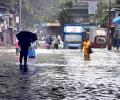
Some low-lying places like Hindmata, and areas in Dadar and Sion, including the Gandhi Market and road number 24 in Sion, were inundated, forcing pedestrians to wade through the water and making it difficult for motorists to commute.

A red alert has been sounded in three districts of Idukki, Thrissur and Palakkad in Kerala.

Chief Minister M K Stalin inspected several inundated areas here along with top officials including Chief Secretary V Irai Anbu and directed authorities to take swift action to drain flood water.

Temperatures remained above 45 degrees Celsius in large parts of Rajasthan, Haryana, Delhi, Chandigarh and Uttar Pradesh, affecting daily life as many chose to remain indoors in the afternoon.

Temperatures in 17 locations breached 48 degrees Celsius on Monday, with the relentless heat affecting health and livelihoods across large parts of northwestern and central India.

'Usually the average rainfall per day is around 8 mm and India is receiving 10 to 11 mm per day since the last one week.' 'July seems to be very good for the entire country.'

The Northern Railways said it has cancelled around 17 trains and diverted around 12 others, while traffic has been suspended at four locations due to waterlogging.
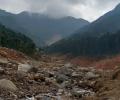
There is a definite attempt to put the landslides on the backburner because news of them and climate change worry Wayanad's tourism and real estate businesses greatly. Whatever I experienced of Wayanad's 2024 by-elections; the July landslides were not a burning issue, observes Shyam G Menon.

Lakhs of voters will have to bear the searing heat when they step out to exercise their franchise in the second phase of the Lok Sabha elections on Friday.

In Uttar Pradesh, the death toll due to lightning strikes rose to 42.

Just two days after recording 811.6 mm of rainfall in a day, Cherrapunji in Meghalaya received a bountiful 972 mm of precipitation in 24 hours ending 8.30 am on Friday, the highest in June since 1995 and the third highest in 122 years, the India Meteorological Department (IMD) said.

Teams of the NDRF have reached several places in Tamil Nadu and Kerala as the two states brace themselves for cyclone Burevi.

The mercury breached the 46-degree Celsius mark in several places such as Allahabad (46.8 degrees Celsius) and Jhansi (46.2 degrees Celsius) in Uttar Pradesh; Sports Complex (46.4 degrees Celsius) in Delhi; Ganganagar (46.4 degrees Celsius) in Rajasthan; Nowgong (46.2 degrees Celsius) in Madhya Pradesh; and Maharashtra's Chandrapur (46.4 degrees Celsius).

The Met office has issued a "red" warning for Delhi, Haryana, Punjab and west Rajasthan, stressing the need for "extreme care for vulnerable people".

Gale-force winds, heavy rainfall and high tidal waves swept the coastal belts of Maharashtra and Goa as Cyclone Tauktae hurtled northwards towards Gujarat.

Intense spells of rain are likely to continue in the districts of Thane, Raigad and Mumbai during next four hours, the India Meteorological Department (IMD) said.

'Already, the temperature has touched 39 degrees in some parts of Gujarat and now we are in the last week of February.' 'We need to activate the heat action plan from March 1.'

Palghar, Thane, Raigad and Ratnagiri could witness thunderstorm activity, lightning, moderate rain and gusty storm over the next two days.
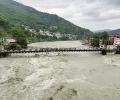
Incessant rains unleashed more death and destruction on Monday in parts of north India, with 37 people killed in landslides and other rain-related incidents in the last two days even as the Army and NDRF teams stepped in to intensify the relief and rescue operations.

Taking to Twitter, the Delhi Traffic Police asked commuters to take the alternate route.

Isolated heavy rainfall is also very likely over north Konkan region during the same period, it said.

The India Meteorological Department has issued an 'orange' alert.
The minimum temperatures are very likely to fall by 2-5 degrees Celsius over most parts of East India, Central India over the next two-three days, while the spell of intense cold can extend beyond that in the Northwest part of the country.

The maximum temperature at the Safdarjung Observatory, Delhi's base station, is likely to rise to 45 degrees Celsius.

Incessant showers caused landslides and floods in various parts of the country leaving at least 17 people dead on Wednesday while thousands more were forced to move to safety as rivers swelled and water reservoirs filled up fast.

Mumbai recorded over 250 mm of rain in just three hours (between midnight and 3 am), touching 305 mm by 7 am on Sunday, a meteorologist said.

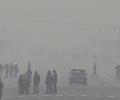
A blinding layer of dense fog over north India, including Delhi, caused major inconvenience to commuters. The visibility levels were 50 metres around 5:30 am.

Ernakulam district authorities on Tuesday said 350 cumecs of the water from Idamalayar, which reached Periyar river but there was no considerable rise in the water-level.

Intense monsoon rains brought normal life to a standstill in several parts of eastern and central Rajasthan, flooding out roads, rail tracks, low-lying residential areas and hospitals and claiming seven lives since Sunday night.

An unspecified number of people were evacuated from coastal areas of Odisha where Jagatsinghpur, Kendrapara, Bhadrak and Balasore were likely to experience heavy rainfall accompanied by high-velocity winds, particularly on May 19 and 20, IMD Director General Mrutyunjay Mohapatra said.

Traffic snarls were reported from different parts of the national capital on Saturday as rain continued to lash New Delhi for the third consecutive day.

The two western states, already battling a raging pandemic, which has put their health infrastructure under severe strain, opened new fronts to tackle the fallout of the storm which is expected to make a landfall close to Mumbai on Wednesday. They are likely to be impacted most by the cyclone.
